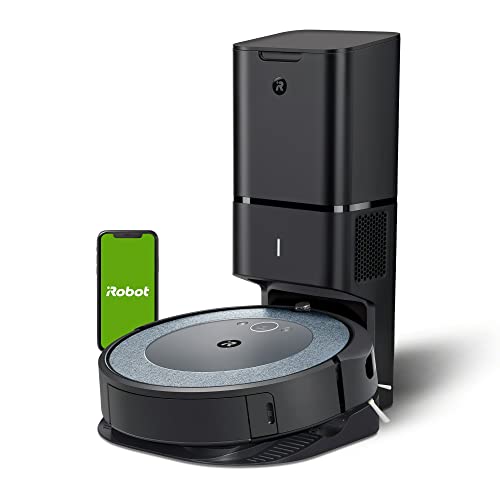
The Ultimate Glossary Of Terms About Self-Empty Robot Vacuum
Benefits of a Self-Empting Robot Vacuum
Many of the top robotic vacuums come with self-emptying bases that can last for months without having to be empty. These are especially useful for those with pets or small children, and for those who struggle with keeping their floors tidy.
The robot's self-emptying function transfers debris from the dustbin to the base. This eliminates the need to empty the robot often. It's a useful feature that makes the robot much more user-friendly.
It's more practical
Self-emptying robot vacuums are less likely to bring debris back into your home following the cleaning process. This feature is especially useful when you have people living in your home who suffer from allergies or respiratory conditions. The debris will be confined to the base, and not released into the air.
Self-emptying robots eliminate the requirement to empty the bin after each cleaning cycle. You don't have to reach into the dustbin to get rid of the dirt. Instead, you'll open the dock station's door to dump it in larger bins.
Depending on the model, the storage container needs to be emptied every 45 to 60 days. You can run the robot more often since you don't have to worry about dirt on your hands.
In addition, many self-emptying models do away with the requirement to manually handle the contents of the dustbin. You'll be able to see the moment when the bin has reached its full capacity, so there's no need to guess.
Find models that have apps integration if you wish to get more from your robot. You can schedule cleaning sessions, create zones that aren't allowed to be in, and much more. In some instances you'll be in a position to use the app to alter settings such as suction power or mopping mode.
Other convenience-enhancing features that are worth considering include obstacle avoidance and object recognition. These features let the vacuum skirt around movable objects (like pet toys or charging cables) and make sure that the entire space is kept clean. There has been a lot of innovation in this area and leading brands like Roborock boasting that their latest models can detect and navigate through a variety of obstacles. The ability to recognize and avoid moving objects could be particularly useful if you have children or pets who are prone to dropping their toys or strangling cords.
It's less icky
Similar to traditional vacuums robots, robots have small dust bins to collect debris when they work. Depending on the frequency of usage and how filthy your flooring is, you might be able to empty this bin after a couple of cleaning cycles. Some models come with a feature which lets the vacuum move its debris into the larger storage bag that is located in the docking station. This eliminates the need to manually empty the bin after every cleaning cycle.
However, it's worth mentioning that the dirt will still be absorbed into the bag and leave a smell on your hands. In addition, you'll need to clean the dustbin when it's full and likely occur every few cleaning cycles.
Some self-emptying robots may also be connected to power outlets in the house for a more thorough cleaning. This makes them particularly useful for homes with large spaces or areas where your vacuum hasn't been capable of reaching. Additionally, some self-emptying robots have advanced navigation features that help them avoid obstacles and even tangled cables that could be blocking their path.
These advanced navigation systems take numerous trips around your house to build an accurate map. This allows the robot to be more precise when it is time to vacuum. They can also detect and skirt around problems such as toys, shoes, or pet clutter that might otherwise cause confusion to the machine.
Self-emptying robotic systems can be a game changer when you suffer from allergies. The automated system will collect and store dust particles that are fine without releasing them in the air. This will make your home more hygienic than if you rely solely on a standard vacuum, which could release those particles into the air.
The primary benefit of a vacuum that automatically empty its own bin is that you save time and energy.
robot vacuum with self emptying is an important benefit for those who are limited in mobility or have limited time. If you're interested in self-emptying robot vacuums, check out the best models in our comprehensive guide.
It's greener
A robot vacuum that can self-empty itself will save you much time. This kind of vacuum uses an additional container that is used to collect dirt and other debris. You'll need to empty it less frequently because the container will be full. This is a more environmentally green method of removing trash instead of throwing it out and refilling the bin.
This type of robot has the benefit of keeping dust in the bin or bag. It isn't necessary to worry about dust getting back into your home. This can be a major benefit for those suffering from allergies, since it makes it easier to manage allergens that accumulate in your home.
While you can certainly find robotic vacuums that don't have self-emptying docks We've observed that they can be somewhat more difficult to use, since they require you to empty the container after every cleaning session. This is particularly the case if you reside in a bigger house because it can be difficult to use the robotic vacuum without an automatic emptying dock when your cleaning schedule requires multiple trips per day.
The CHOICE small appliances team has put a range of self-emptying robots on the test, and we've found that they can make cleaning more efficient and effective than traditional vacuums. Many of these models offer a range of other handy features, like an app on your mobile that lets you see how your home is kept clean in real-time; the capability to designate zones that are 'no-go' and to adjust the suction power and an alert system that sends you a message when your bot is struggling or running low on power.
Some models, such as the Shark AI Robot Self-Empty, come with the unique HEPA 60-day capacity base that collects and traps dirt and allergens. This is an excellent option for families with children or pets as it will keep the air in your home more clean than it otherwise be.
Some of the models we tried also come with a mopping function, which is useful to keep your floors in top shape. These robots utilize a microfibre pad that's moistened using a water tank at their base. Some robots can even avoid obstacles like tangled lamp cables and pet waste.
It's more expensive
The self-emptying feature of robot vacuums adds to the overall price of the machine. However, the additional cost is worth it if you don't wish to be constantly cleaning your robot's dust bin after every use. It also stops issues like overfilling the bin and clogs, which can affect the vacuum's functionality over time. In addition to making your life easier, it also extends the lifespan of the vacuum, ensuring it works well for as long as you have it.
Self-emptying robots typically come with a large docking station that serves as both a larger trashcan as well as a charging station for the machine. They are able to hold weeks or even months of debris before needing to be empty. This will give you peace of mind and lets you concentrate on other tasks of the week or day.
These stations are much easier to use than onboard bins that aren't always easy to open. They have a pull tab or handle to make it easy to dump the waste. Depending on the size of your home and the frequency you use the robot the base may need to be emptied up to twice per cleaning cycle. They can also be used as charging stations, which is a great method to maximize the use of your robot vacuum.
It's important to note that self-emptying models will need some upkeep, such as emptying their bins in the onboard storage and wiping the sensors. This is less frequent than maintenance for non-self-emptying robots.
One more thing to keep in mind when considering self-emptying robot vacuums is that these units are generally a little bulkier and consume more space than traditional robot vacuum docks. This could be a challenge if you want to hide your robot vacuum in an area that is not visible from the outside. However, it appears that manufacturers are paying more attention to design lately as we can see in the most recent Roomba J7+ and Roborock Q5. Both models have an elegant canister design than previous models, and have the matte ribbed finish. They also have the option of a leather pull tab to open the lid.